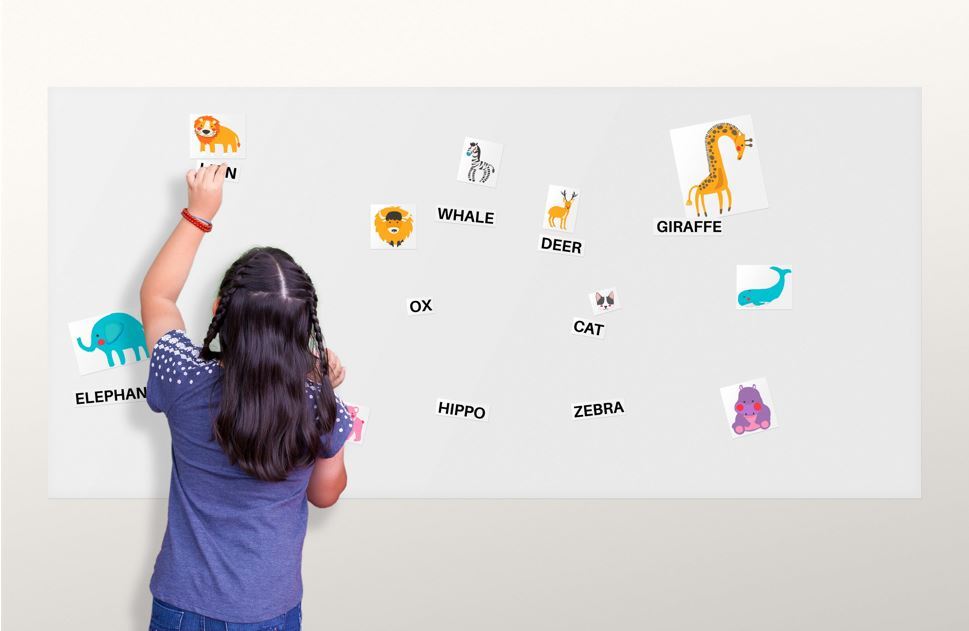
Classroom dry erase boards
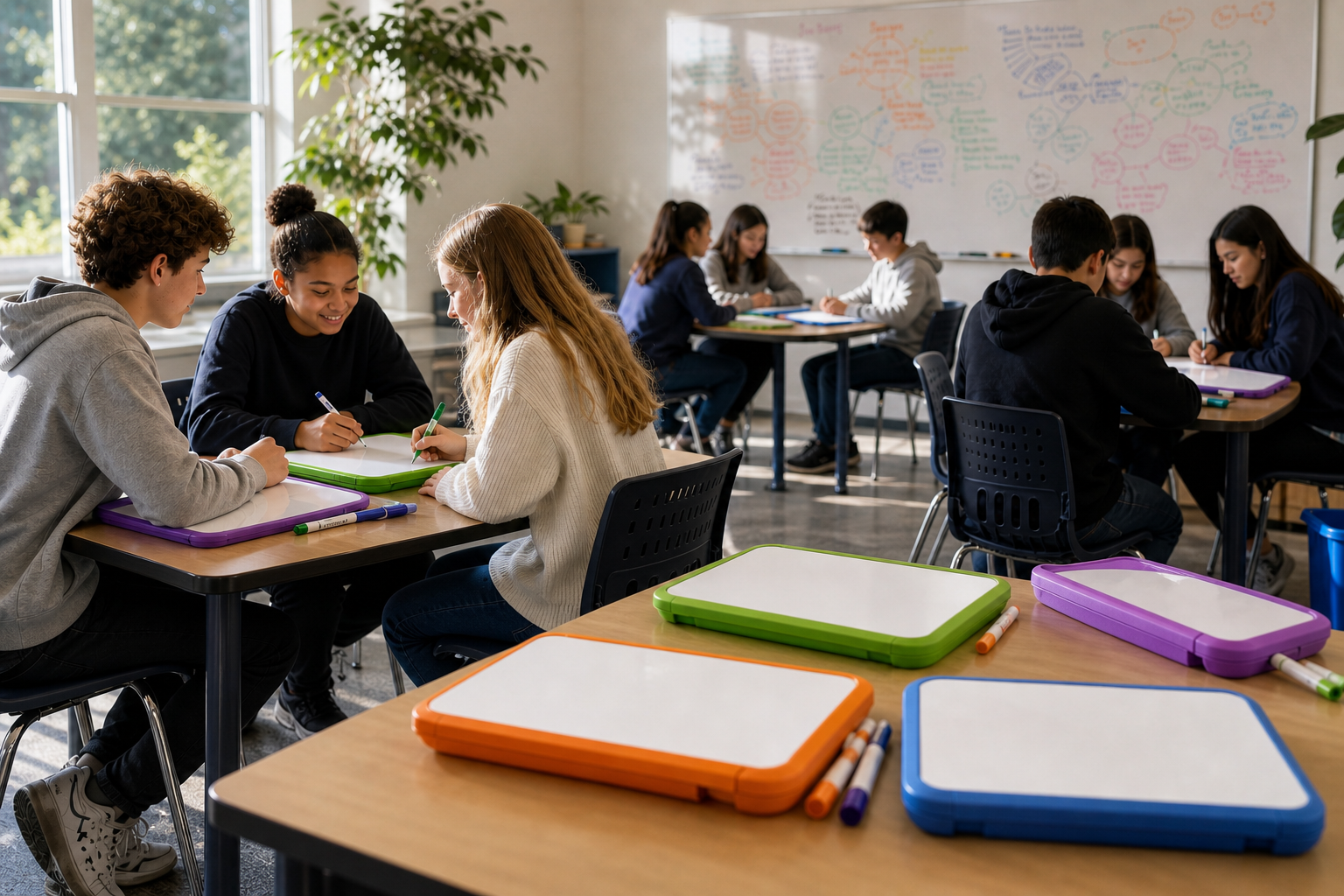

Keeping students engaged throughout a lesson often requires more than a textbook or worksheet. Teachers need flexible classroom tools that encourage participation while supporting different teaching styles and learning environments.
Student lapboards provide each learner with a reusable writing surface for practicing skills, answering questions, brainstorming ideas, and participating in classroom activities. Their portable design also makes them useful for flexible seating, small-group instruction, tutoring, and homeschool settings.
This guide explains the benefits of student lapboards, how they're used in today's classrooms, and what to consider when choosing the right option for your students.
Student lapboards are individual dry erase boards designed for students to write, erase, and reuse throughout the school day. Unlike large classroom whiteboards that support teacher instruction, lapboards give each student a personal workspace for participating in lessons and practicing new skills.
Their portable design allows students to work comfortably at their desks, on the floor, in learning stations, or during small-group activities. Their reusable surface makes them suitable for daily classroom activities across multiple subjects while reducing the need for disposable worksheets.
They're used in a variety of learning environments, including elementary schools, middle and high schools, special education classrooms, tutoring programs, and homeschool settings.
One of the biggest advantages of portable lapboards is that they can be used anywhere learning takes place. As classrooms become more flexible, students are no longer expected to remain at their desks throughout every lesson. They move between teacher instruction, collaborative activities, independent practice, and learning centers during the day.
Portable lapboards make these transitions easier by providing each student with a lightweight writing surface that travels with them.
Teachers often choose portable lapboards because they:
Their portability also makes them practical outside the traditional classroom. Tutors, intervention specialists, after-school programs, and homeschool educators often use lapboards because they are easy to transport and require very little setup.
Rather than replacing notebooks or classroom whiteboards, portable lapboards complement them by giving students a convenient space for short practice activities, brainstorming, and classroom discussions.
| Student Lapboards | Paper Worksheets |
| Reusable | Single-use |
| Easy to update and erase | New copies needed for revisions |
| Supports immediate feedback | Feedback usually comes later |
| Useful for collaborative activities | Primarily individual work |
| Reduces paper consumption | Requires ongoing printing |
Different classrooms have different instructional needs. Choosing a lapboard that aligns with your lesson plans can improve efficiency while giving students a reusable workspace designed for specific activities.
| If you need... | Choose... |
| Everyday classroom activities | Classic Student Lapboards |
| Music instruction | Music Lapboards |
| Piano lessons | Music Staff & Keyboard Lapboards |
| Graphing & STEM | Line & Graph Lapboards |
| Geography | U.S. Map Lapboards |
| Custom curriculum | Custom Student Lapboards |
1. Classic Student Lapboards: For everyday instruction, Classic Student Lapboards provide a blank dry erase surface suitable for nearly every subject. They're commonly used for:
Daily classroom work
Literacy activities
Math practice
Guided instruction
Small-group learning
Exit tickets
Brainstorming sessions
Because of their versatility, blank lapboards are often the starting point for classrooms looking to incorporate reusable writing surfaces into daily instruction.
Shop: Classic Student Lapboards
2. Handheld Dry Erase Music Lapboards: Music classrooms often require students to quickly write notes, rhythms, and musical notation during instruction.
Rather than repeatedly drawing staff lines by hand, teachers can use OptiMA Handheld Dry Erase Music Lapboards that include permanent music layouts beneath the writable surface. These boards work well for:
Music theory
Rhythm practice
Ear training
Classroom rehearsals
Individual music assessments
They also allow teachers to reuse the same instructional layout throughout the school year.
Shop: Handheld Dry Erase Music Lapboards
3. Music Staff & Keyboard Lapboards: When students are learning note placement alongside keyboard recognition, a combination layout can simplify instruction.
Music Staff & Keyboard Lapboards allow students to connect written notation with keyboard positioning, making them useful for beginner piano instruction and elementary music education. Teachers often use them for:
Piano lessons
Music literacy
Note identification
Keyboard exercises
Classroom music activities
Shop: Music Staff & Keyboard Lapboards
4. Handheld Line Graph Boards: Subjects such as mathematics, science, and engineering frequently require structured writing spaces.
Instead of drawing grids before every lesson, teachers can use OptiMA™ Handheld Line Graph Whiteboards for activities including:
The pre-printed layout helps students organize information more clearly while saving valuable classroom time.
Shop: Handheld Line Graph Boards
5. U.S. Map Student Lapboards: Geography and social studies lessons become more interactive when students can write directly on reusable maps.
OptiMA™ Student Lapboard with a U.S. Map support activities such as:
Teachers can reuse the same maps throughout the year while allowing students to complete multiple review activities.
Shop: U.S. Map Lapboard
6. Custom Student Lapboards: Some schools require lapboards designed around their own curriculum or instructional routines. For example, teachers may want permanent layouts for:
School branding
Reading groups
Classroom routines
STEM challenges
Writing templates
Math frameworks
In these situations, Custom Student Lapboards allow schools to create reusable learning tools that align with specific classroom objectives rather than adapting generic layouts.
Shop: Custom Printed Lapboards
Routine care helps keep student lapboards in good condition throughout the school year. A few simple habits can extend their lifespan:
With regular cleaning and proper storage, high-quality student lapboards can provide reliable classroom use for years.
Student lapboards continue to be one of the most practical classroom tools because they support a wide range of teaching styles without adding complexity to daily instruction. From quick formative assessments and guided practice to collaborative learning and independent work, they give every student a reusable space to think, write, and participate.
Their portability also makes them suitable for flexible classrooms, tutoring sessions, homeschool environments, and subject-specific instruction.
Are student lapboards suitable for all grade levels?
Yes. Student lapboards can be used from preschool through high school, although the activities and board designs may vary by age. Younger students often use them for handwriting, letter formation, and basic math, while older students use them for note-taking, problem-solving, science diagrams, and collaborative activities.
Related Read: How Dry Erase Boards Support Student Learning Across Every Grade Level
What's the difference between student lapboards and classroom whiteboards?
Student lapboards are individual portable dry erase boards designed for personal use, while classroom whiteboards are larger surfaces used for whole-class instruction. Many classrooms use both together, teachers present lessons on a wall-mounted whiteboard while students complete activities on their own lapboards.
How many student lapboards should a classroom have?
Many schools provide one lapboard per student so everyone can participate simultaneously during lessons. In classrooms with rotating learning stations or shared resources, teachers may choose a smaller set based on class size and instructional needs.
What size student lapboard is best for classroom use?
The ideal size depends on the age of the students and the activities being completed. Smaller lapboards are often easier for younger learners to handle, while larger boards provide additional writing space for older students working on diagrams, calculations, or collaborative exercises.