Student lapboards
Portable lapboards


Classrooms have changed significantly over the past decade. Instead of relying solely on lectures and note-taking, many teachers now encourage students to solve problems together, participate in discussions, and learn through hands-on activities. Classroom layouts have also evolved, with flexible seating, collaborative workspaces, and interactive learning becoming common across elementary schools, high schools, and higher education.
While technology plays an important role, many educators continue to rely on classroom dry erase boards because they are simple, adaptable, and encourage active participation. Students can write, erase, revise ideas, and work together without the pressure of creating a permanent answer. Teachers can also adjust lessons quickly to match different learning styles and classroom needs.
This guide explores how classroom dry erase boards support active learning, collaborative instruction, STEM education, Montessori classrooms, and flexible learning environments, along with the key features to consider when selecting the right board.
Active learning encourages students to participate in the learning process rather than passively receiving information. Instead of simply listening to a lesson, students discuss ideas, solve problems, explain their thinking, and collaborate with classmates.
Dry erase boards naturally support this approach because they create a low-pressure environment for learning. Since work can be erased and revised easily, students are often more willing to test ideas, make corrections, and contribute during classroom activities.
They also give teachers the flexibility to update lessons, display examples, and adjust instruction throughout the day without relying on printed materials.
No single teaching style works for every classroom. Fortunately, dry erase boards can support multiple instructional approaches, making them useful across different grade levels and subject areas.
During direct instruction, teachers often use whiteboards to explain concepts, demonstrate problem-solving methods, and summarize key points. Students benefit from clear visual explanations while teachers can adjust lessons in real time based on classroom questions.
Large wall-mounted boards also allow teachers to build on previous concepts without switching between multiple presentation tools.
Collaborative learning encourages students to solve problems together instead of working independently.
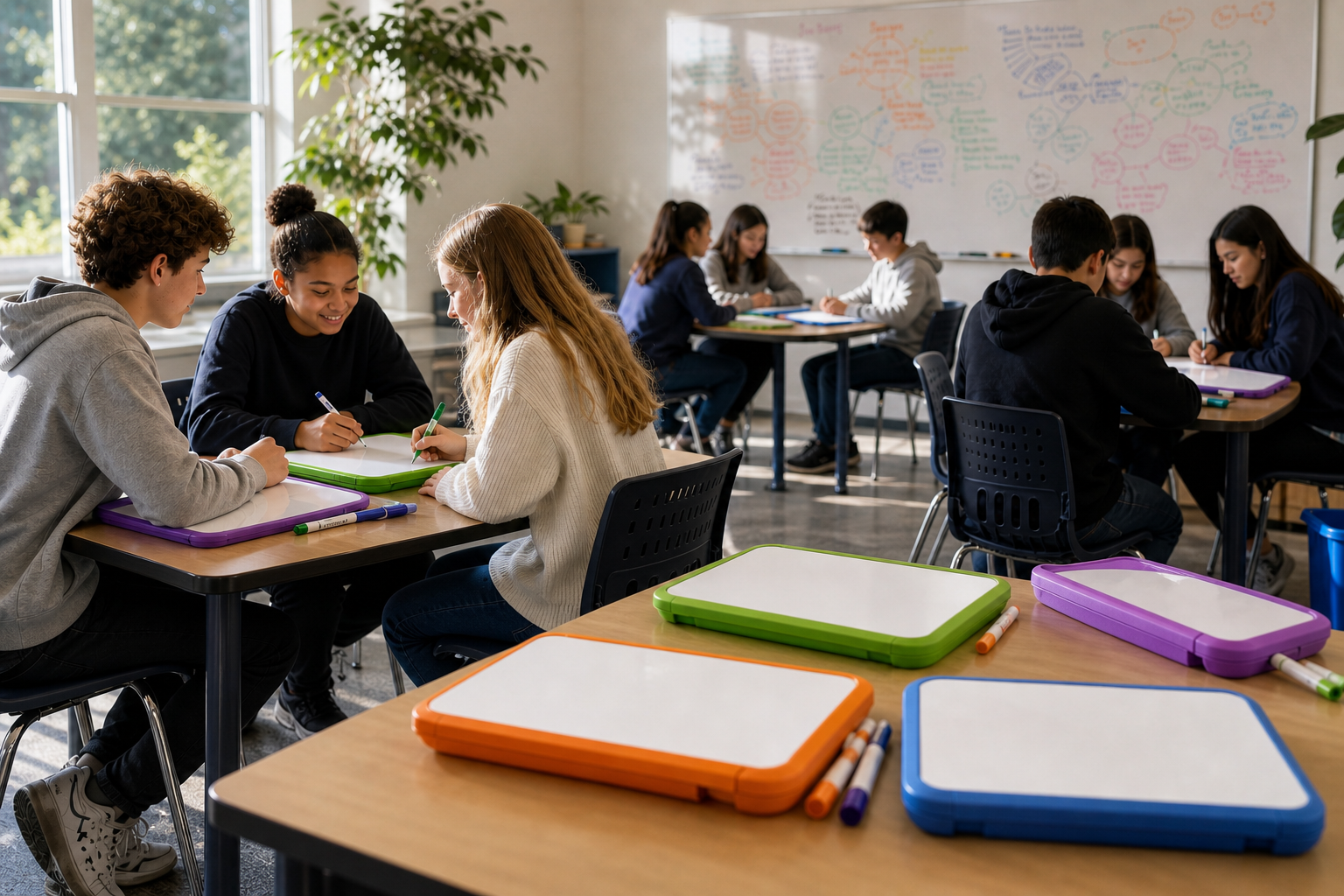
Small group whiteboards or shared classroom boards allow students to:
Inquiry-based classrooms encourage students to ask questions, investigate ideas, and develop solutions independently.
Dry erase boards provide a flexible space where students can:
Since information changes throughout the learning process, erasable surfaces naturally support experimentation and revision.
Every classroom includes students with different learning needs and abilities. Dry erase boards allow teachers to adapt instruction through small-group lessons, visual demonstrations, individual practice, and quick formative assessments without interrupting the overall flow of the lesson.
Montessori education emphasizes independence, hands-on exploration, and learning through meaningful experiences. Rather than focusing on lectures, students work with carefully selected materials that encourage observation, experimentation, and self-directed discovery.
While traditional Montessori classrooms often use tactile learning materials, dry erase boards can complement this approach when used intentionally. They provide reusable writing surfaces that support practice, creativity, and independent thinking without replacing core Montessori materials.
Dry erase boards can also support mixed-age classrooms by allowing teachers to create reusable learning prompts that can be adapted for different skill levels throughout the day.
Rather than serving as the primary teaching tool, they become one of many flexible resources that encourage exploration, problem-solving, and independent learning.
One of the biggest shifts in classroom design has been the growing use of vertical learning spaces, where students stand and work on whiteboards instead of remaining seated throughout lessons.
This approach gained wider attention through research on Thinking Classrooms, which found that students often engage in richer discussions and collaborate more effectively when solving problems on vertical, non-permanent writing surfaces.
Instead of working individually at desks, students gather in small groups around wall-mounted whiteboards or portable dry erase surfaces. As they discuss ideas, they can quickly revise diagrams, solve equations, and build on one another's thinking.
While not every lesson needs a vertical learning format, many schools now incorporate dedicated whiteboard spaces to create more flexible and interactive classrooms.
| Grade Level | Common Classroom Uses |
| Pre-K & Kindergarten | Letter tracing, number recognition, drawing, visual schedules |
| Elementary | Guided reading, spelling practice, math problem-solving, collaborative activities |
| Middle & High School | Science diagrams, group discussions, brainstorming, project planning |
| Higher Education | Engineering design, seminars, healthcare training, collaborative problem-solving |
Because dry erase boards support both teacher-led instruction and student collaboration, they remain useful across virtually every educational setting.
Science, technology, engineering, and mathematics (STEM) education often involves experimentation, collaboration, and continuous revision. Students rarely arrive at the correct solution on the first attempt, making erasable workspaces particularly valuable.
Dry erase boards also make it easier for teachers to assess student thinking throughout the learning process. Rather than reviewing completed assignments after class, educators can observe how students solve problems in real time and provide guidance before misconceptions become habits.
In project-based learning environments, boards often serve as central planning spaces where teams organize timelines, assign responsibilities, and track progress throughout longer-term projects.
Not every classroom has the same instructional needs. Selecting the right board depends on how it will be used, who will use it, and the available classroom space.
Before purchasing classroom whiteboards, schools should evaluate several practical considerations.
The writing surface affects durability, maintenance, and long-term performance.
For classrooms with daily use, porcelain or ceramic steel surfaces typically offer greater resistance to staining and ghosting than painted alternatives. High-quality surfaces also remain easier to clean after years of frequent writing and erasing.
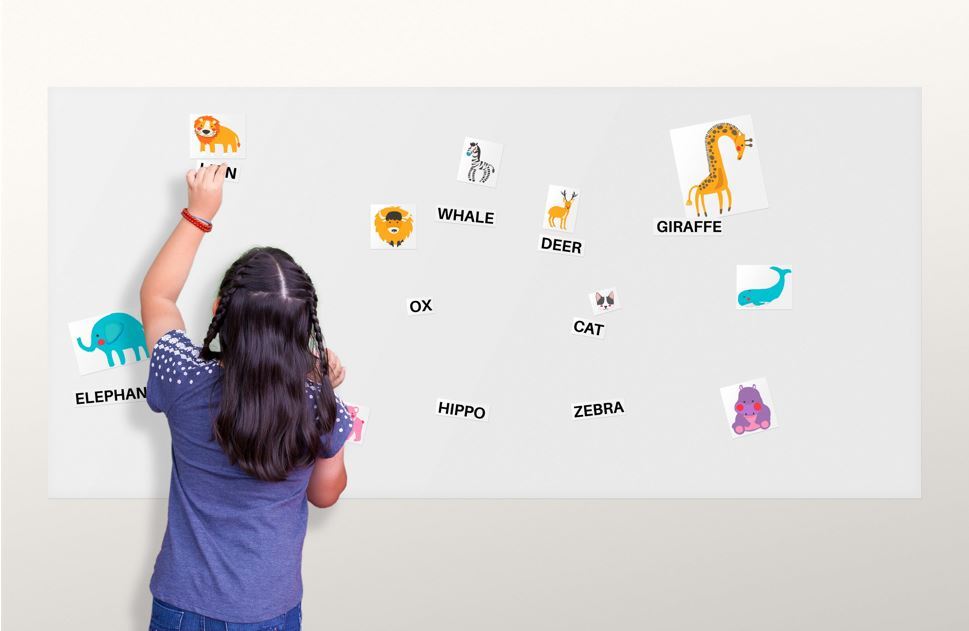
Magnetic dry erase boards provide additional flexibility by allowing teachers to display instructional materials without tape or pins. Magnetic surfaces can support:
For classrooms that rely heavily on visual instruction, magnetic functionality often improves organization throughout the day.
Board size should match both classroom layout and instructional style. Consider:
In some schools, several smaller collaboration boards provide greater flexibility than one large front-of-class whiteboard.
Educational environments place heavy demands on classroom equipment. A quality dry erase board should withstand:
Routine maintenance is simple when teachers use appropriate dry erase markers, microfiber cloths, and non-abrasive cleaning products.
While blank classroom whiteboards remain suitable for everyday instruction, some schools benefit from boards designed around recurring classroom activities.
Custom printed dry erase boards include permanent layouts beneath the writable surface, helping teachers avoid recreating the same templates every day.
For classrooms that rely on structured visual routines, a custom design can improve consistency while reducing setup time between lessons.
Schools creating boards for specific curriculum requirements or instructional workflows may also consider Custom Printed Dry Erase Boards, which allow layouts to be tailored to individual classrooms, departments, or educational programs.
Not every classroom requires a fully customized layout. Many schools prefer ready-to-use printed dry erase boards that feature common educational templates while remaining immediately available for installation.
These options work well for schools that want structured instructional tools without developing a custom design from scratch.
Teachers comparing classroom layouts may also find that Stock Printed Dry Erase Boards offer a practical starting point for common educational activities while still providing reusable writing surfaces.
Classroom dry erase boards remain one of the most versatile teaching tools available, supporting everything from early literacy and STEM instruction to collaborative learning and project-based activities. Their reusable surface, adaptability, and ability to encourage active participation make them a practical solution for classrooms of every grade level. Whether schools choose traditional whiteboards, custom printed layouts, or stock printed designs, selecting the right solution can help create more engaging and flexible learning environments.
Can classroom dry erase boards improve student participation?
Yes. Dry erase boards encourage every student to contribute during lessons rather than relying on a few volunteers. Because students can write, erase, and revise their work easily, many feel more comfortable sharing ideas, answering questions, and participating in group activities.
Are magnetic dry erase boards better for classrooms?
It depends on how the classroom is used. Magnetic boards allow teachers to display visual aids, schedules, maps, and instructional materials alongside written lessons, making them useful in classrooms that rely on visual learning. Non-magnetic boards may be sufficient for spaces that primarily require writing and drawing.
What size dry erase board works best for a classroom?
The ideal size depends on the room layout and teaching style. Large wall-mounted boards work well for whole-class instruction, while smaller collaboration boards support group activities and learning stations. Many schools use a combination of both to create flexible learning environments.
How long do classroom dry erase boards typically last?
The lifespan depends on the board's surface material, frequency of use, and maintenance. High-quality porcelain and ceramic steel boards can provide many years of reliable classroom use when cleaned regularly and used with appropriate dry erase markers.
How do you prevent ghosting on classroom dry erase boards?
Using high-quality dry erase boards, appropriate markers, and regular cleaning helps prevent ghosting. Porcelain and ceramic steel surfaces typically resist staining better than painted boards and remain easier to maintain with frequent classroom use.